Locations
Elopement ideas in Southern California
Southern California is one of the easiest places in the country to elope. Within a few hours you can stand in a quiet ocean cove, on a desert ridge or beside a mountain lake, often on the same weekend. An elopement keeps the focus on the two of you and the place you chose, and it frees up budget and time for the parts you care about. Below are the settings we suggest most often, what each one feels like, the basics of a California marriage license, and a few ways to include a handful of guests without losing the intimacy.
Laguna Beach coves and the Dana Point headlands
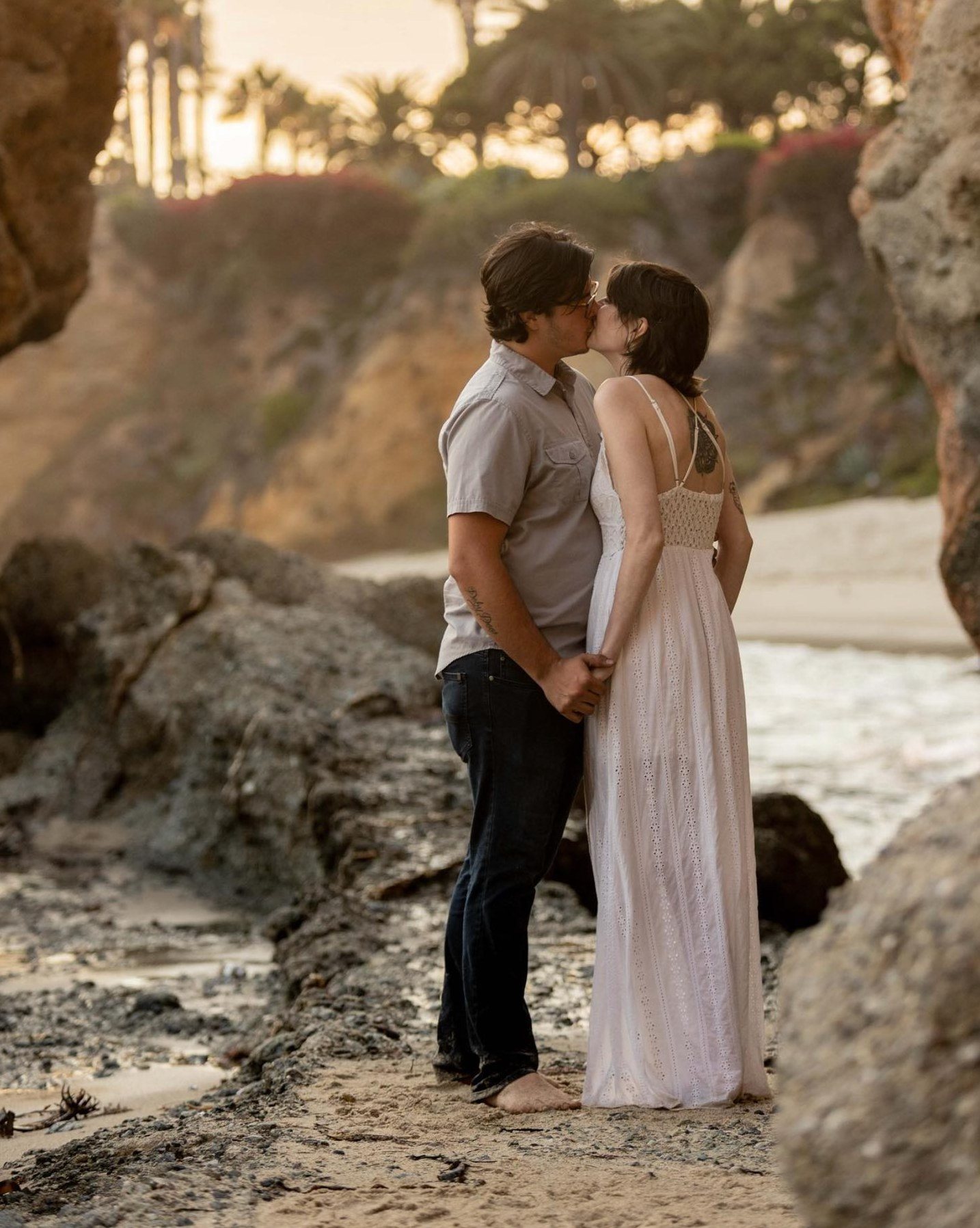
Laguna Beach is lined with small coves separated by rock, and spots like Victoria Beach and Thousand Steps Beach feel tucked away even though they sit below neighborhoods. Tide pools, sea caves and cliffs give you a lot of variety in a short walk. Low tide opens up more beach, so we check tide charts when we plan the time.
The City of Laguna Beach states that professional still photography on city property, including parks and beaches, requires a permit, so build that into your planning. We cover the details in our guide to photo permits at Southern California beaches and parks.
A little south, the Dana Point Headlands Conservation Area has about three miles of public trails, ocean overlooks and the Nature Interpretive Center. It is protected habitat, so it suits a quiet walk and portraits more than a set-up ceremony. When we checked the city page in October 2026, trails were open only on certain days with a 6 pm closing and no pets allowed, which rules out summer sunsets on the trails. Check current hours before you plan.
Malibu and La Jolla
Malibu offers bigger, wilder coastline. El Matador State Beach is known for its sea stacks and rock arches, reached by a staircase down the bluff. It is a state beach, so permits for professional photography may apply; check with California State Parks before your date. Bring shoes you can manage on stairs and sand.
In San Diego, La Jolla has coastal bluffs, coves and cliff-top paths with long ocean views. It is busy on weekends, so early mornings or weekday evenings tend to feel calmer. Local rules can vary by beach and park, so check with the City of San Diego for the spot you want.
Catalina Island
Catalina Island is a ferry ride from the mainland and feels like a small getaway on its own. Avalon has a walkable harbor, hillside views and a slower pace, which makes it a good choice for couples who want the elopement to double as a short trip. Plan ferry times carefully around your ceremony and portraits, and confirm any permit needs for the location you choose with the island's local authorities.
Joshua Tree, Palm Springs and Anza-Borrego
The desert gives you open space, warm light and some of the darkest skies in the region. Joshua Tree National Park requires a special use permit for all ceremonies in any area of the park, limits weddings to two hours including photos, and lists approved locations with group size limits on its weddings page. Palm Springs adds mid-century architecture and palm-lined streets, and the city requires a film permit for filming activity, so ask the Palm Springs Film Office what applies to your shoot.
Anza-Borrego Desert State Park, east of San Diego, is California's largest state park and was recognized as an International Dark Sky Park. It is a good choice for couples who want badlands, wildflowers in a good spring and a night sky full of stars.
Big Bear Lake and the mountains
Big Bear Lake gives you pine forest, a mountain lake and a real change of season, including snow in winter. Cabins make a natural getting-ready space, and a lakeshore or forest overlook works well for a short ceremony. Much of the surrounding land is part of the San Bernardino National Forest, where commercial activities and group events may need a permit, so check with the Forest Service for the area you want.
California marriage license basics
Rules can change, so confirm the details with the county clerk where you buy your license and with the California Department of Public Health. Here is what the official sources we checked say.
- Two license types. California offers a public marriage license and a confidential marriage license.
- Public license: at least one witness must be present at the ceremony, and the license has room for no more than two witness signatures.
- Confidential license: no witnesses are required, but the couple must already be living together as spouses when they apply and sign an affidavit saying so.
- Where you marry: you can buy a license in any California county, but the ceremony must take place in California.
- Timing: county clerk sites state the license is valid for 90 days, and both of you need to appear in person with valid ID.
You will also need someone legally able to officiate. Ask your county clerk about who qualifies and about appointment availability, which can fill up in busy seasons.
Small-guest ideas that keep it intimate
Eloping does not have to mean no one else is there. Many of our elopements include a few people, and the day still feels like yours.
- Invite only your witnesses. With a public license, one or two people you love do double duty.
- Plan a dinner after. A private table at a nearby restaurant or a catered meal at a rental house makes a full evening.
- Video call family in. A phone on a small tripod lets parents and grandparents watch the vows.
- Write your own vows. Without a large audience, couples tend to say more.
- Mail a small announcement. A few prints from the day make a thoughtful keepsake for family who could not attend.
Our elopement coverage starts at $700 for three hours, which fits a short ceremony, portraits and a little time to explore.