Planning
Beach wedding photo tips from the sand up
A beach wedding in Southern California sounds simple: ocean, sand, sunset. In practice, the beach is one of the most changeable places to get married. The water moves, the wind picks up, the sun drops fast and sand gets into everything. None of that is a reason to skip it. It is a reason to plan a little differently. These are the tips we share with every couple who books us for a ceremony near the water.
Check the tide before you pick a time
The single most overlooked detail in beach wedding planning is the tide. A beach that looks wide and spacious at your site visit can shrink to a narrow strip a few hours later. Coves and pocket beaches, common in Laguna and parts of San Diego, are especially sensitive.
Tide predictions are published far in advance, so you can look up your exact date as soon as you have one. Ideally, your ceremony and portraits happen on a low or falling tide. Some cities build this into their rules. The City of Laguna Beach, for example, says it does not issue wedding permits around high tide or after sunset.
Also keep an eye on surf. Larger swells can push water much farther up the sand than the tide chart alone suggests. We like to set the ceremony a comfortable distance back from the wet line.
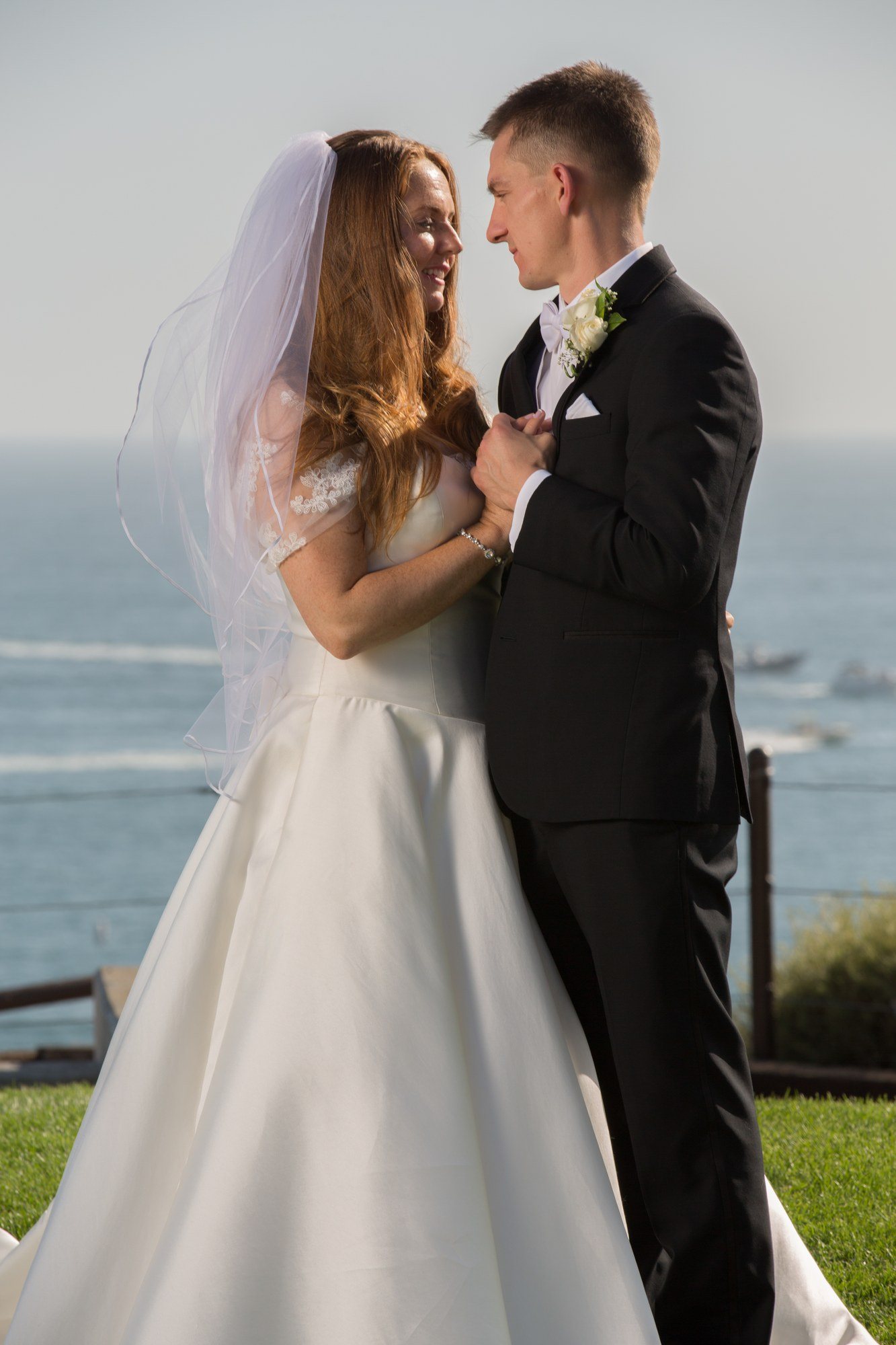
Plan for wind, especially with a veil
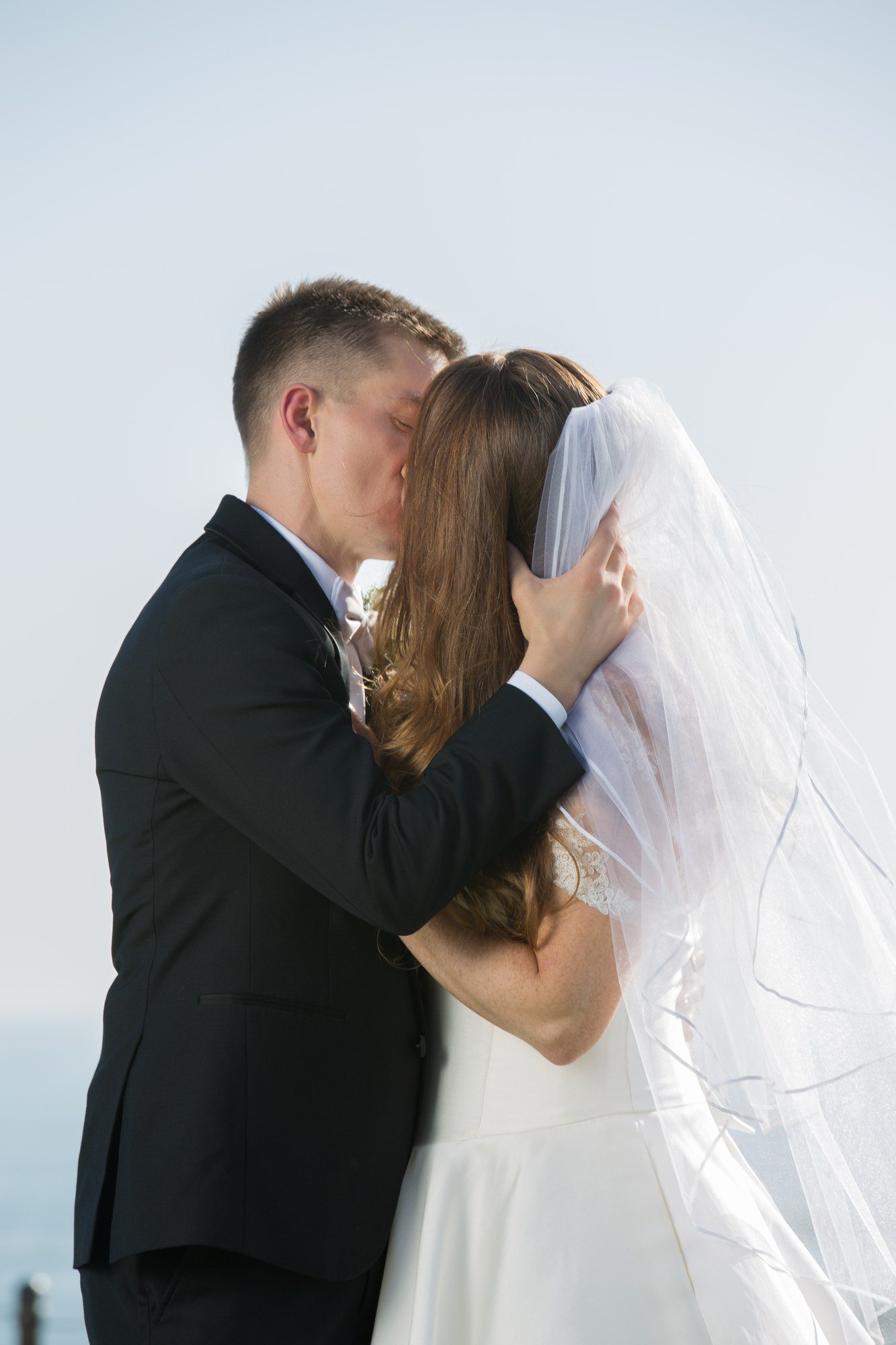
Coastal breezes are normal, and they usually build through the afternoon. A long, sheer veil can look beautiful in the wind for a few portraits, and it can also wrap around your face during the vows.
- Have your stylist secure the veil with extra pins or a comb designed for wind.
- Consider wearing the veil for the processional and portraits, then removing it for the ceremony if it is gusty.
- Ask your florist about arches and arrangements that can be weighted or staked into the sand.
- Skip loose petals and lightweight signage that will blow away. Some cities ban thrown petals on public beaches anyway.
We also position couples with their backs to the wind when we can, so hair and veils blow away from faces instead of across them.
Use the sun, do not fight it
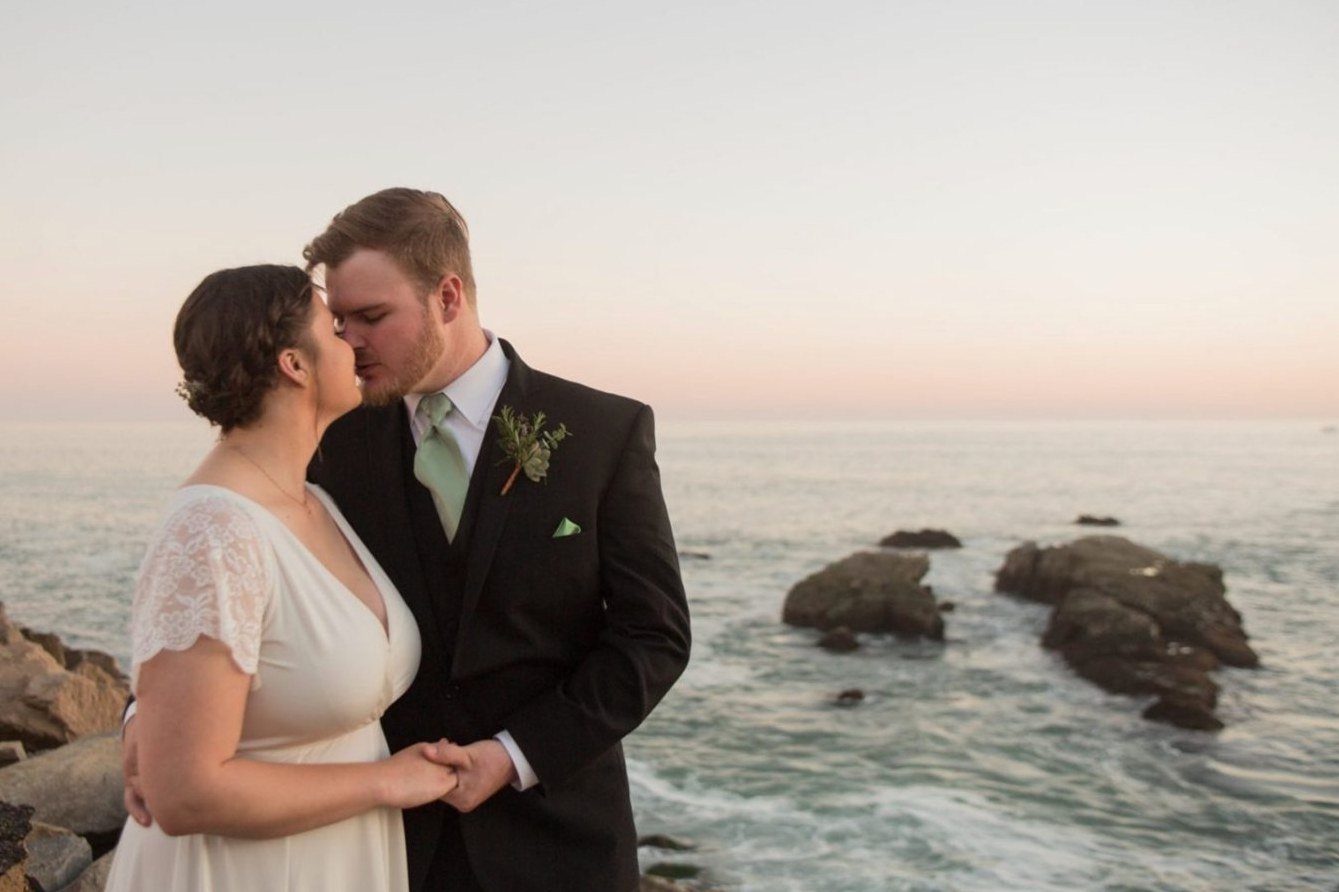
Most of the Southern California coast faces west or southwest, so the sun sets over the water. That is beautiful for portraits and difficult for a ceremony. If the officiant faces the guests with the ocean behind the couple, low afternoon sun can shine directly into guests' eyes or create harsh light on the couple's faces.
We usually recommend ending the ceremony 60 to 90 minutes before sunset. That leaves time for family photos in softer light and couple portraits in the last stretch before the sun goes down. Our Orange County beach wedding timeline lays out a full sample schedule.
Remember that the sun sets in a different spot through the year, farther north in summer and farther south in winter. We check the angle for your date and location so we know where the light will fall.
Sand, footwear and the aisle
Dry sand is soft and uneven. Heels sink, and walking down a sandy aisle in a long gown takes real effort.
- Barefoot works well for many couples. Have a spot to leave shoes and a towel or rinse station nearby.
- Flat sandals, block heels or wedges are better than stilettos if you want shoes.
- Consider a simple runner or a path of packed sand for the aisle, if your location allows it.
- Tell guests in advance so they can dress for sand. Older guests may appreciate a seat close to the path.
For photos, wet sand near the water is firmer and reflective, while dry sand higher up is easier to stand in for a long ceremony. We use both.
Keep guests comfortable
Your guests' experience shows up in your photos. Squinting, shivering or distracted guests make for tense candids.
- Share parking and walking directions ahead of time. Beach access often involves stairs or a walk from the lot.
- Offer water and shade for afternoon ceremonies, and a blanket basket for cool evenings.
- Keep the ceremony short and sweet. Twenty minutes in the wind feels longer than it sounds.
- Know the local rules. San Diego's city wedding site guide, for example, notes no glass and no thrown petals, rice or birdseed at its parks and beaches.
Get clean sound for your vows
Waves and wind are loud, and they are the biggest reason beach vows are hard to hear. A handheld microphone on a stand will pick up mostly wind.
We place small lavalier microphones on the officiant and, when possible, on one partner, and use wind protection on every mic. If you are having a speaker system for guests, place it so it faces away from the ocean and test it at the same time of day as your ceremony.
Timing and permits
Many public beaches in Southern California require a permit for ceremonies, and some require a separate permit for professional photography. Summer weekends are the busiest, and some cities limit which beaches allow weddings in peak season. Start checking requirements early with the city, county or state park that manages your beach, and leave buffer time for setup and cleanup within any permit window.