Planning
An Orange County beach wedding timeline, built from sunset
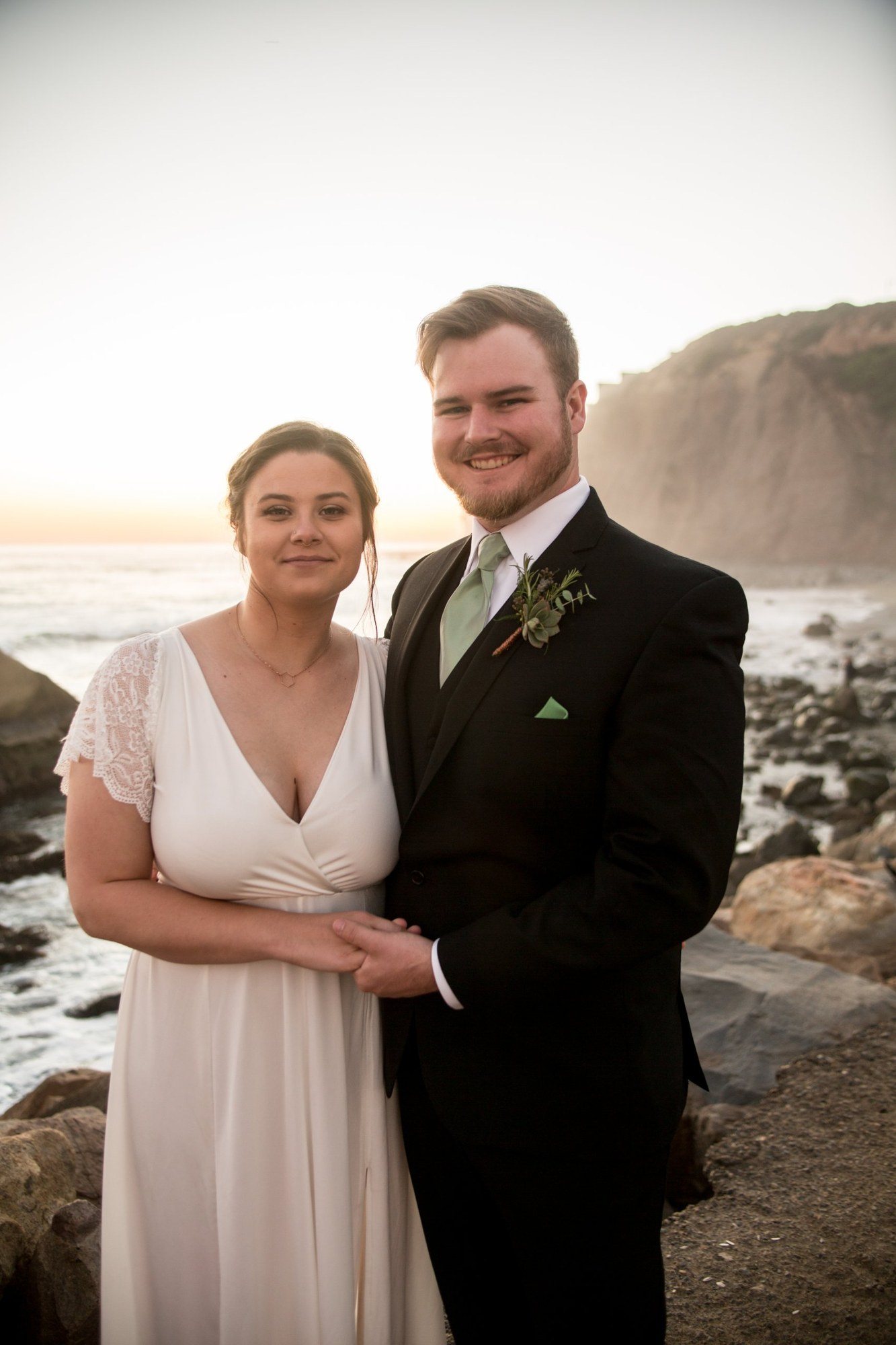
A beach or bluff wedding in Orange County lives and dies by the light. The ceremony, the portraits and the first part of the reception all depend on when the sun goes down on your date. So instead of starting with a getting-ready time and working forward, we start with sunset and work backward. Below is the method we use, a full worked example, and the practical things that tend to catch couples off guard on the sand.
Start with your sunset time
Look up the exact sunset for your date and location. On the Orange County coast it ranges from about 4:45 PM in December to just after 8:00 PM in late June. Our guide to the best time of day for wedding photos has a month-by-month table.
Then mark three things on your planning sheet:
- Sunset. Couple portraits should wrap by this time.
- Golden hour. Roughly the hour before sunset. Your portrait block sits in the back half of it.
- Blue hour. About 15 to 30 minutes after sunset. Good for a short set of evening portraits during dinner.
Work backward, block by block
Once sunset is on the page, each piece of the day falls into place behind it. These are the typical lengths we plan around:
- Couple portraits: 30 to 40 minutes, ending at sunset
- Wedding party photos: 15 to 20 minutes
- Family formals: 20 to 30 minutes, depending on the list
- Cocktail hour buffer and walking time: 10 to 15 minutes
- Ceremony: 20 to 40 minutes for most couples
- Guest arrival and seating: 20 to 30 minutes before the start
Add the blocks together and you get your latest ceremony start time. If that time feels too early for your guests, a first look helps. We can photograph the wedding party and some couple portraits before the ceremony, which shortens the block after it.
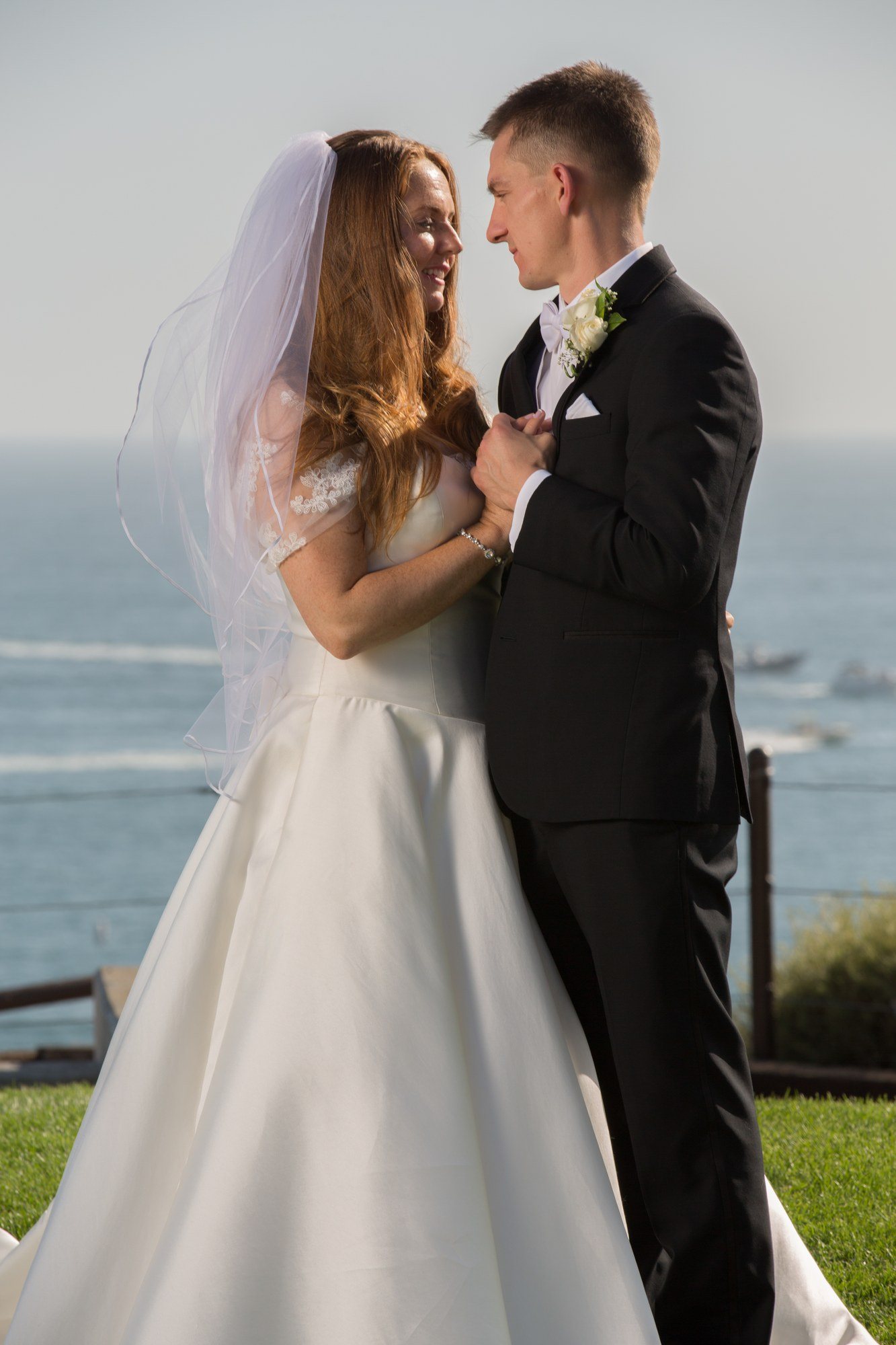
A worked example: mid-September in Orange County
Here is a sample timeline for a bluff-top ceremony in mid-September, when sunset is around 7:05 PM. It assumes an eight-hour package with two photographers, no first look, and a reception at a nearby venue.
| Time | What is happening |
|---|---|
| 2:30 PM | Photographers arrive, details and getting ready |
| 3:30 PM | Getting dressed, portraits with parents |
| 4:15 PM | Travel to ceremony site |
| 4:45 PM | Guests arrive and are seated |
| 5:15 PM | Ceremony begins |
| 5:40 PM | Ceremony ends, cocktail hour begins |
| 5:45 PM | Family formals at the ceremony site |
| 6:10 PM | Wedding party photos |
| 6:25 PM | Couple portraits, moving toward the water |
| 7:05 PM | Sunset. Couple joins cocktail hour or grand entrance |
| 7:15 PM | Dinner service begins |
| 7:25 PM | Five to ten minutes of blue hour portraits between courses |
| 8:15 PM | Toasts, first dance |
| 8:45 PM | Cake cutting, open dancing |
| 10:30 PM | Coverage ends |
A few things to notice. The ceremony ends almost 90 minutes before sunset. That gap feels long on paper, but family photos and moving a group across sand always take longer than planned. The couple portraits land right in the warmest part of the light, and the blue hour set is short enough that nobody misses dinner.
If you wanted the ceremony closer to sunset, say 6:00 PM, a first look at 3:45 PM would let us finish the wedding party and most portraits beforehand. After the ceremony we would only need family formals and a quick sunset walk.
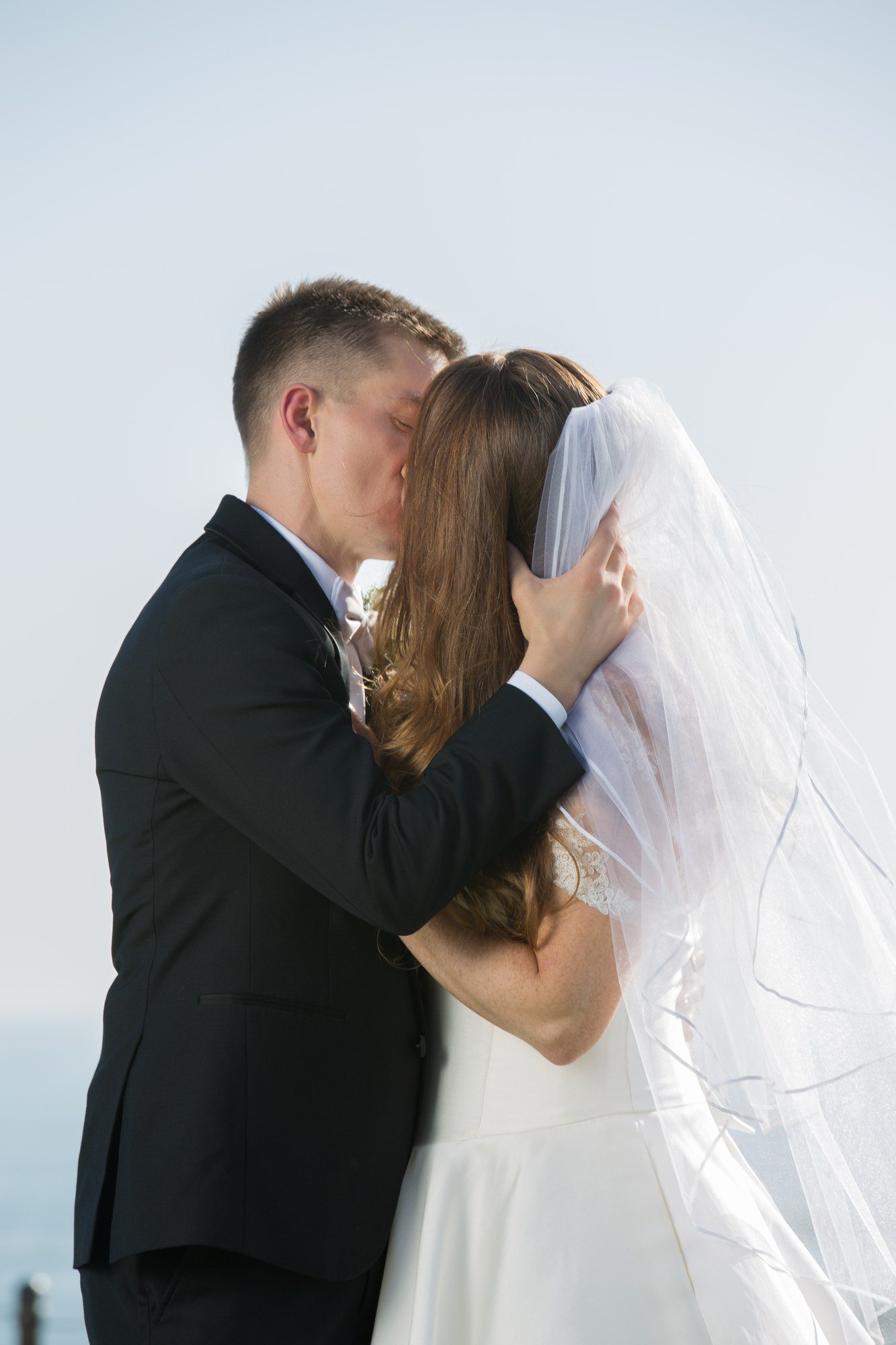
Plan for wind, sand and tides
Afternoon wind along the coast is common. It moves veils and hair, flips programs, and makes speeches hard to hear. Weigh down anything light, and ask your officiant to use a small microphone if you can.
Sand slows everyone down. Guests in heels need more time to walk in, and so does an older relative. If the ceremony is on the beach, plan an accessible path or a seat closer to the entrance.
Check a tide chart for your date. A high tide can shrink a beach to a thin strip, and some coves are only reachable at lower tides. We check the tide for portrait spots before the day too.
Permits and the marine layer
Many Orange County beach cities require a permit for ceremonies on public beaches and in parks. Laguna Beach, for example, requires wedding permits for its beaches and parks, and its limits on group size include the photographer. Rules, fees and approved sites vary by city and can change, so check with the city or park well before you send invitations. Our guide to photo permits at beaches and parks has more.
In May and June the marine layer can hide the sun completely. Your timeline still works, because the light simply becomes soft and even. Keep the same structure and enjoy the extra flexibility.