Light & timing
The best time of day for wedding photos in Southern California
Most couples pick a ceremony time based on the venue contract, the dinner service, or what feels normal. Then they find out the light at 2:00 in July looks nothing like the light at 6:30. In Southern California the sun is strong, the sky is often clear, and the coast adds its own weather. A little planning around the light makes a bigger difference to your photos than almost any other choice you make. Here is how we think about it after ten years of photographing weddings, starting in Orange County.
Golden hour: the window everyone talks about
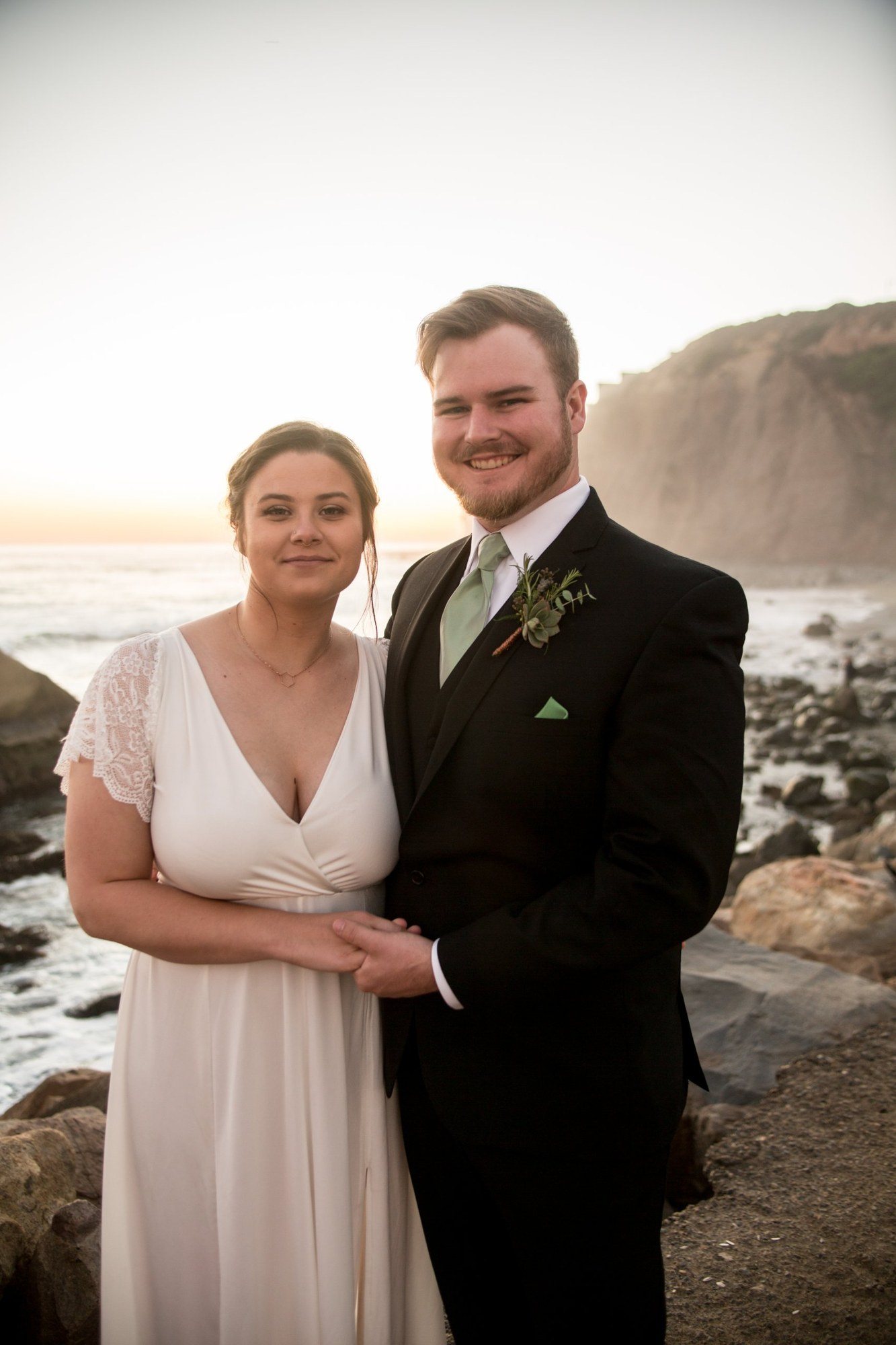
Golden hour is roughly the hour before sunset. The sun sits low, so light comes in from the side instead of straight down. Skin looks warm, shadows get soft and long, and the ocean picks up color instead of glare.
This is the window we protect for couple portraits. Even 20 to 30 minutes of it gives us enough variety for a full set: walking shots, close portraits, wide frames with the coastline or the venue behind you.
The catch is that golden hour moves a lot through the year. In June it can start after 7:00 PM. In December it can be over before 5:00. That is why we always start a timeline from the sunset time on your actual date, not from a template.
Orange County sunset times by month
These are approximate mid-month sunset times for the Orange County coast. Inland and up in the hills, the sun can drop behind a ridge earlier than the official time. Check the exact time for your date once it is set.
| Month | Approx. sunset (PM) | Golden hour starts around |
|---|---|---|
| January | 5:15 | 4:15 |
| February | 5:45 | 4:45 |
| March | 7:05 | 6:05 |
| April | 7:25 | 6:25 |
| May | 7:50 | 6:50 |
| June | 8:05 | 7:05 |
| July | 8:05 | 7:05 |
| August | 7:45 | 6:45 |
| September | 7:05 | 6:05 |
| October | 6:25 | 5:25 |
| November | 4:50 | 3:50 |
| December | 4:45 | 3:45 |
The jump between February and March, and again between October and November, comes from daylight saving time. A wedding on the first Saturday of November can have a very different evening than one in late October, so double check which side of the clock change your date falls on.
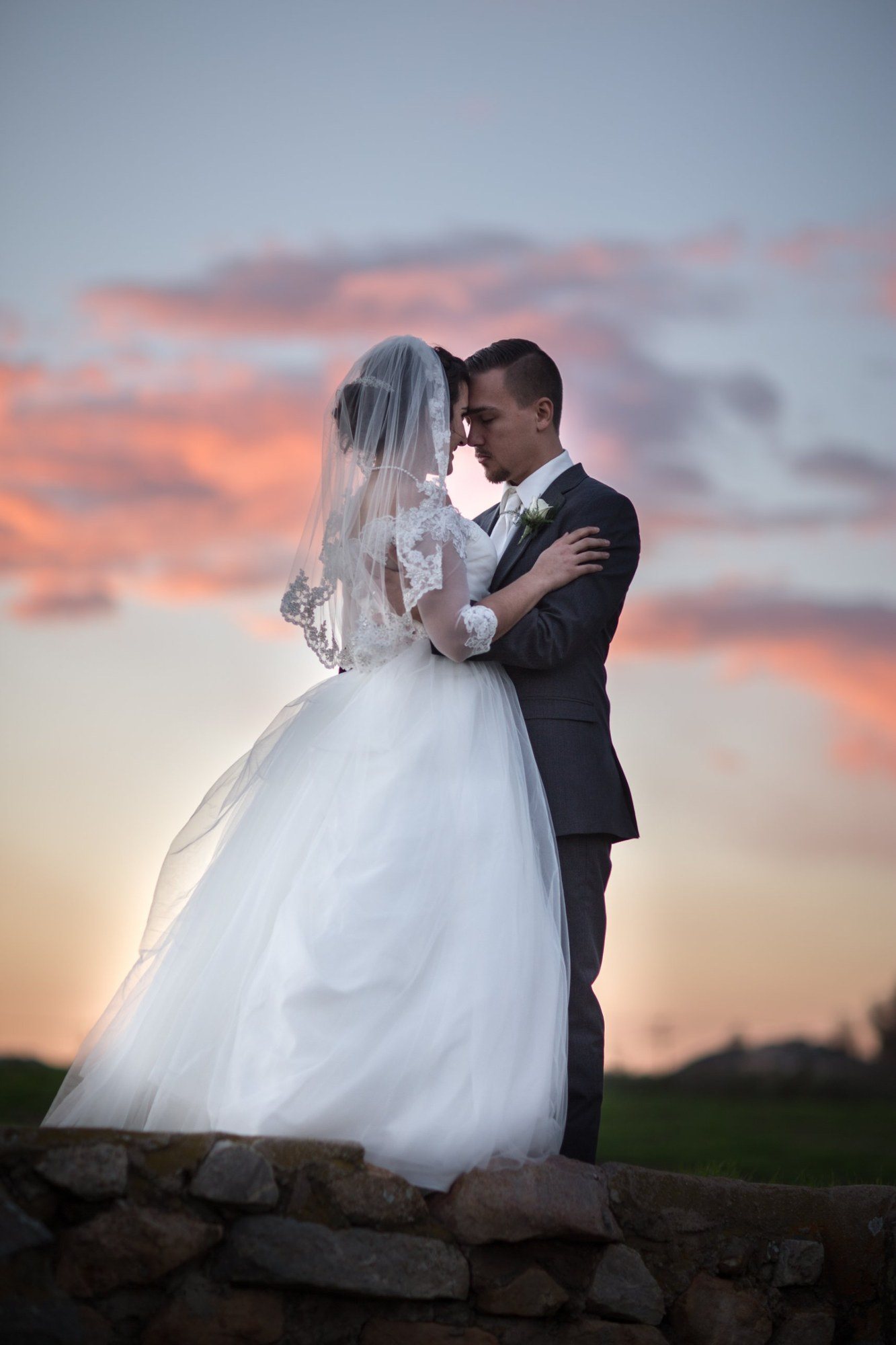
Blue hour: the short, quiet window after sunset
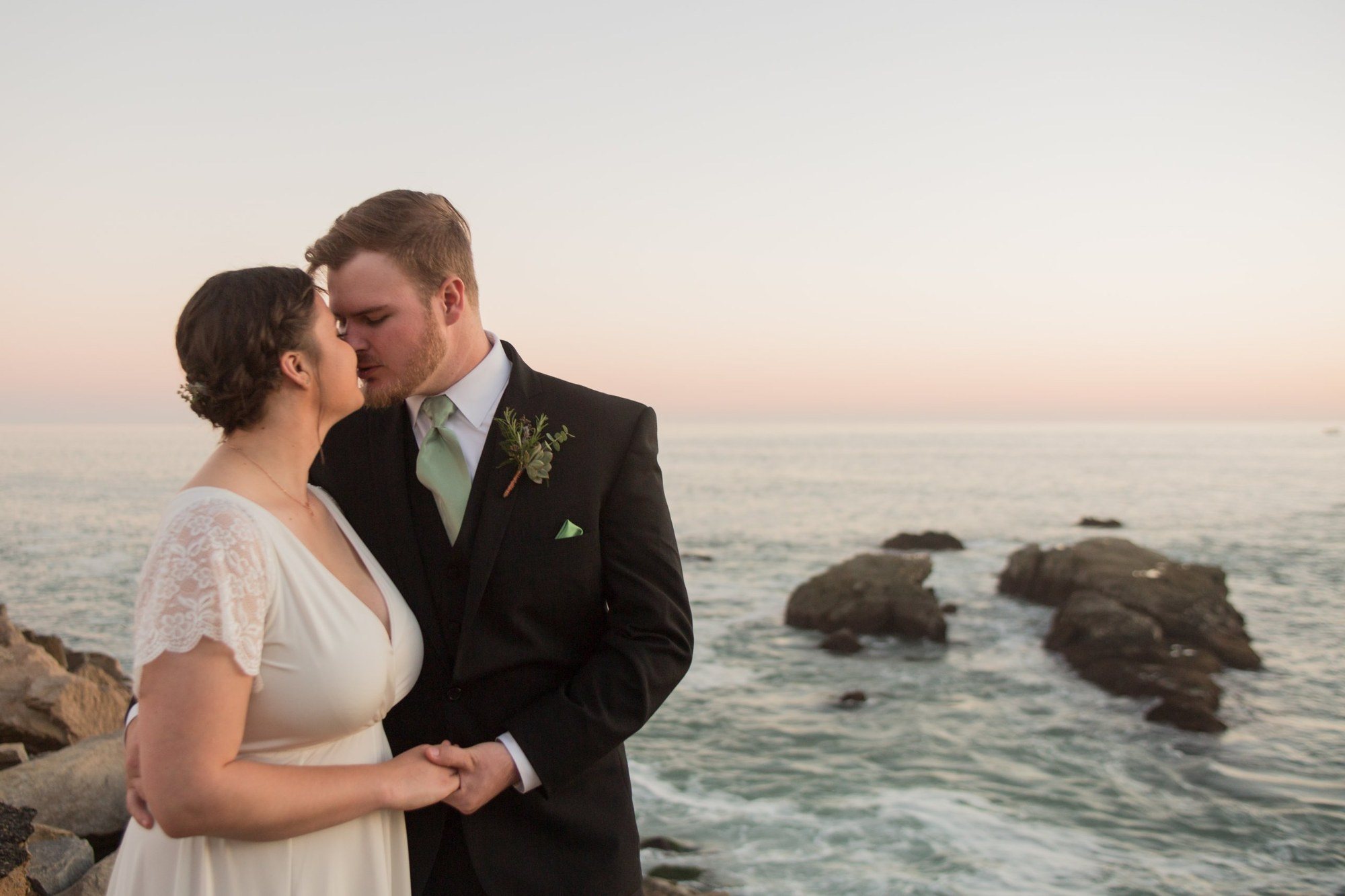
Blue hour is the 15 to 30 minutes after the sun goes down. The sky turns soft blue or lavender, the light is even, and string lights or venue lighting start to glow against the sky.
It works well for a few specific things:
- Wide shots of the venue or reception with lights on
- Quiet portraits on a bluff or beach without harsh contrast
We usually ask for five to ten minutes during dinner. It is easy to step out between courses, and the photos look different from anything else in your gallery.
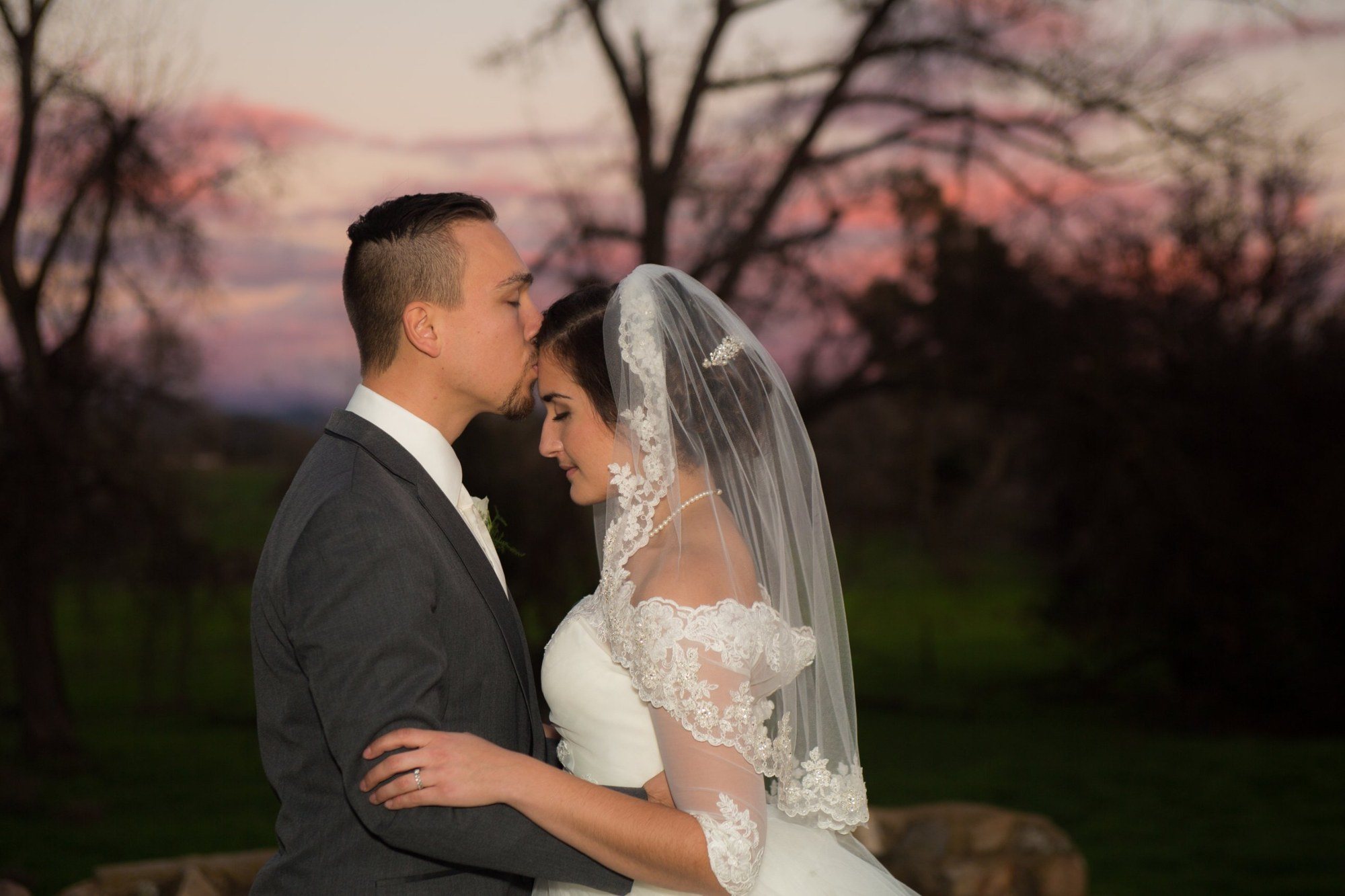
Midday sun: how we work with it
Not every wedding can wait until evening. Church ceremonies, cultural traditions, and venue schedules often put key moments at noon or early afternoon. That is fine. Midday light is harder, but it is workable.
- Find open shade. The shady side of a building, a covered walkway, or a big tree gives even light on faces.
- Put the sun behind you. Backlighting avoids squinting and gives a soft glow around hair.
- Use the architecture. Arches, courtyards and porches at many Southern California venues were built for shade.
- Save the open beach for later. Wide beach portraits at noon tend to look flat and bright. We plan them for the end of the day.
For the ceremony itself, ask your venue where the sun will be at your start time. An aisle that faces straight into the afternoon sun means squinting guests and half your face in shadow. Turning the setup even 45 degrees can fix it.
The coast has its own weather
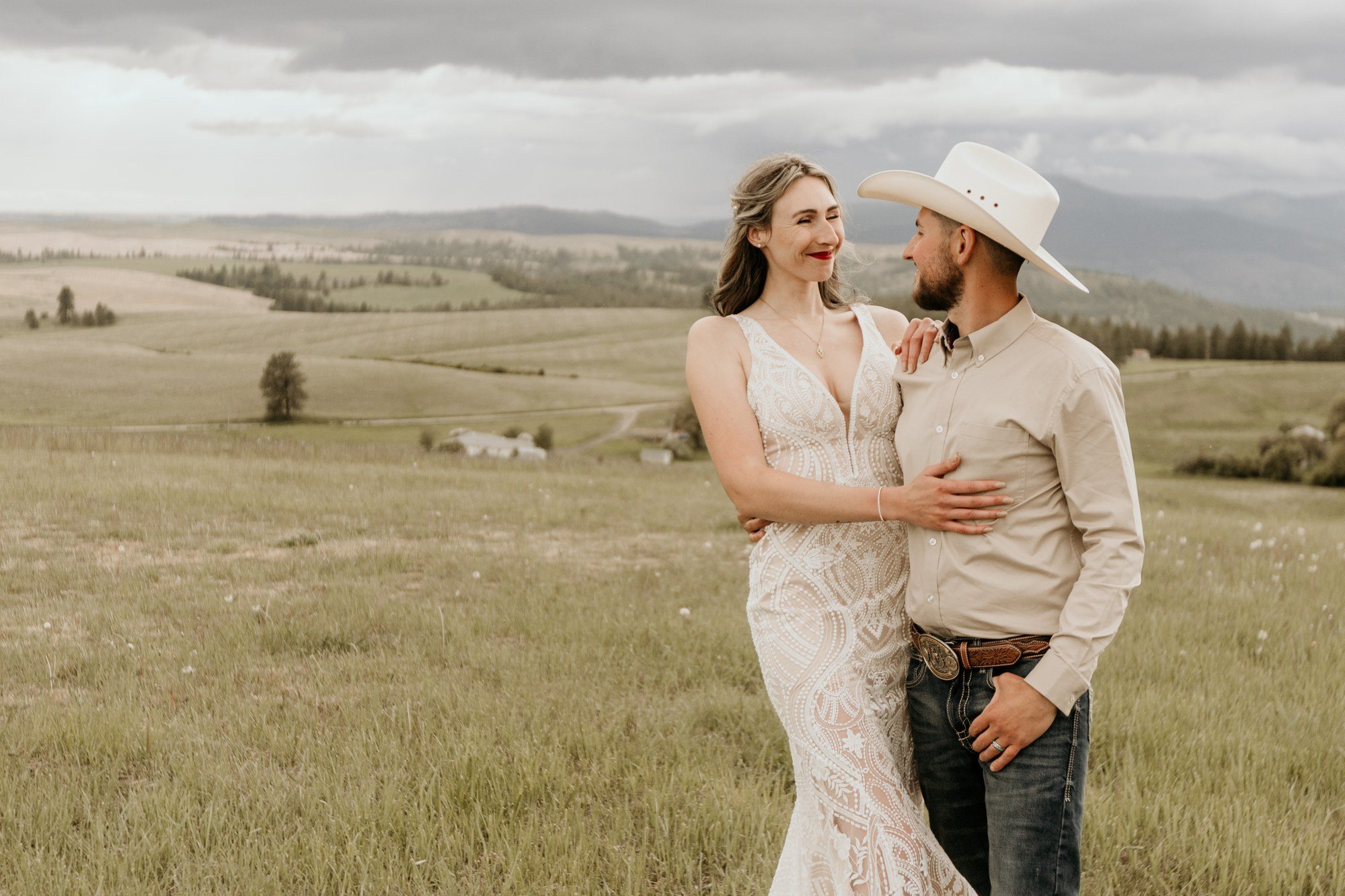
Along the Orange County, Los Angeles and San Diego coast, a marine layer can roll in during late spring and early summer. Locals call it May Gray and June Gloom. It can soften the light all day, or burn off in the afternoon, or sit right on the water at sunset.
Overcast light is actually kind to skin and easy to work with. You may not get a fiery sunset, but you get even, flattering portraits at almost any hour. We cover this more in our guide to June Gloom wedding photos.
Wind is the other coastal factor. It often picks up in the late afternoon near the water. Veils, loose hair and long dresses move a lot, which can look great in photos but is worth planning for.
How to use this when you plan your day
A simple way to start: look up your sunset time, then work backward.
- Aim to finish couple portraits by sunset.
- Plan to start them about 30 to 45 minutes before sunset.
- End the ceremony, family photos and wedding party photos before that block begins.
- If you want a lot of portraits, consider a first look so some of them happen earlier in the day.
If you are planning a beach or bluff ceremony, our Orange County beach wedding timeline walks through a full example built from the sunset time.